Quick Summary
- Use this brief before drafting title options so the wording starts with the viewer and the finished video, not a generic formula.
- Fill in the audience, viewer need, video promise, proof, discovery context and language before writing variants.
- Draft three different but truthful angles, then check each against the footage and thumbnail.
- Copy the blank worksheet below into your notes or production document; a completed example shows how to use it.
- The brief helps organize a decision. It does not guarantee clicks, rankings or a winning test.
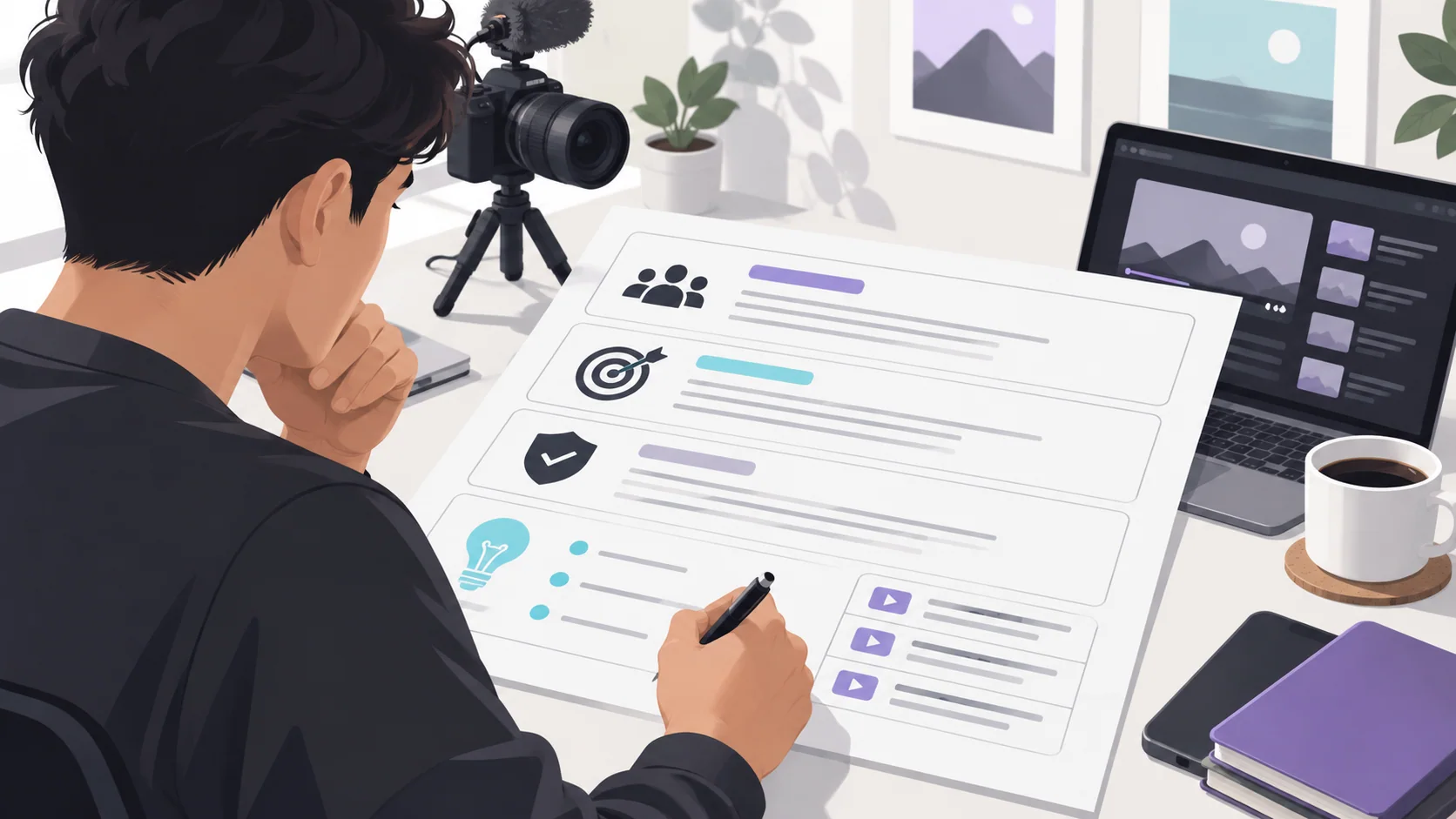
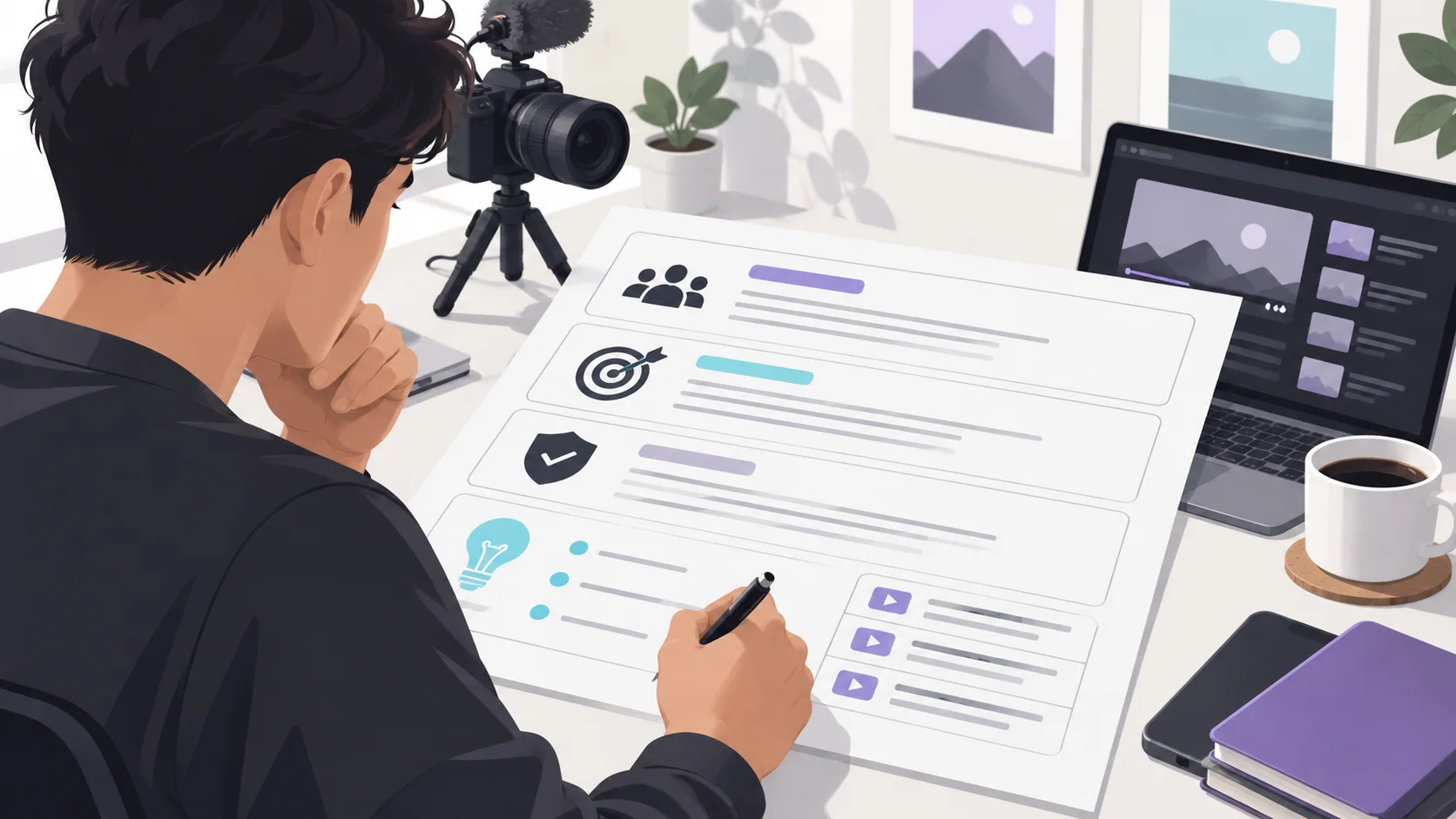
A useful YouTube title brief is a one-page record of who the video is for, what it promises, what evidence supports that promise and which title variants you plan to review. Copy the worksheet below for each video, then use the checks to remove vague or unsupported wording.
Copyable YouTube title brief template
Copy this worksheet into your production notes and complete the fields before writing titles.
VIDEO TITLE BRIEF

Video or working title:
Planned format: tutorial / review / comparison / story / challenge / other

AUDIENCE
Who is the intended viewer?
What do they already know?
What question, problem or interest brings them here?

PROMISE
What will the viewer learn, see or experience?
What is the one main takeaway?
What is outside the scope of this video?

EVIDENCE AND PAYOFF
What footage, test, source or story supports the promise?
Where does the opening establish the subject?
Where does the video deliver the payoff?
Which claims need qualification?

DISCOVERY CONTEXT
Likely discovery: YouTube Search / Home / Suggested / subscriber feed / other
What words would this viewer use for the topic?
What context must appear near the beginning?

LANGUAGE AND READABILITY
Draft language: Tamil script / Tanglish / English / mixed
Preferred wording from audience research:
Mobile clarity check:
Terms or names that must remain exact:

TITLE OPTIONS
A. Direct and searchable:
B. Outcome or decision-led:
C. Curiosity-led, with a real payoff:

THUMBNAIL AND OPENING
What does the thumbnail add?
What does the opening confirm?
Does either element create a promise the video cannot keep?

FINAL REVIEW
Accurate to the finished video? yes / revise
Under the 100-character field limit? yes / revise
Important subject near the beginning? yes / revise
Chosen title and reason:
Reviewer and date:
Completed example for a phone-storage tutorial
This example is an editorial exercise, not a measured result. The assumed video demonstrates how to inspect storage categories and safely remove selected temporary files. It does not promise that every phone has identical menus or that a fixed amount of space will be recovered.
| Brief field | Example completion |
|---|---|
| Audience | Android users who see a low-storage warning and are unsure what is safe to remove |
| Promise | Show how to inspect storage and identify safe cleanup options |
| Evidence | Screen recording of the settings path and explanation of what each category contains |
| Discovery context | Search for a practical fix; include “phone storage” early |
| Direct title | Phone Storage Full? Check These Settings First |
| Outcome title | Free Phone Storage Without Deleting Your Photos |
| Curiosity title | The Storage Folder I Check Before Deleting Anything |
| Thumbnail role | Show the storage screen or a clear before-and-after, only if the video proves it |
| Opening payoff | Name the phone context and show the settings path immediately |
If the actual video does not show the steps or establish that photos remain untouched, revise the second title. The title must reflect the content, not the intended script.
How to use the brief
Write the audience and payoff in plain language before applying a title formula. Then use the YouTube title formulas by format to make several options that suit the tutorial, review, comparison or story. If you are deciding between Tamil, Tanglish and English phrasing, the language testing framework helps keep the promise equivalent.
Read each option aloud and check it against the thumbnail and first minute. A title test can compare options, but it cannot rescue a vague video idea or unsupported claim. The YouTube title-testing guide explains how to compare title-only variants when native testing is available.
Frequently asked questions
What should a YouTube title brief include?
Include the viewer, their need, the video's promise, supporting evidence, discovery context, language, title variants and a final accuracy check. The worksheet above covers each field.
Is this a title generator?
No. It is a planning worksheet that helps a creator define the video promise and create better-informed title options. For idea generation, use the [free Scriptio viral title generator](https://scriptio.in/tools/viral-titles/) after completing the audience and evidence fields.
Use the template
Copy the blank worksheet into your production notes and complete it before writing title options. Keep the completed brief with the video outline so the editor, thumbnail designer and creator work from the same promise.
Sources: YouTube thumbnail and title tips, YouTube title and thumbnail A/B testing
Write your next script in 60 seconds.
Scriptio writes a full Tanglish script in your exact voice, built from your own channel.
Explore the Tamil AI script writer or the Tanglish script generator for a more detailed walkthrough.
Start Free at Scriptio.in