Quick Summary
- Choose the language your intended viewer uses to recognize the problem, not the language you assume the algorithm prefers.
- Write the same promise in Tamil script, Tanglish and English before comparing which version feels clearest and most natural.
- Keep the video, thumbnail and meaning consistent so the test is about language, not a different idea.
- Use YouTube Studio title testing if available; otherwise, treat sequential edits as observations, not a controlled test.
- Check comments, search terms and audience feedback to learn how viewers actually describe the topic.
There is no universal winner between Tamil, Tanglish and English YouTube titles. Choose the language that makes the video’s subject and payoff clearest to the audience you want. Draft equivalent versions, check readability on mobile, then compare them with a controlled test where YouTube Studio makes one available.
What is the difference between Tamil, Tanglish and English titles?
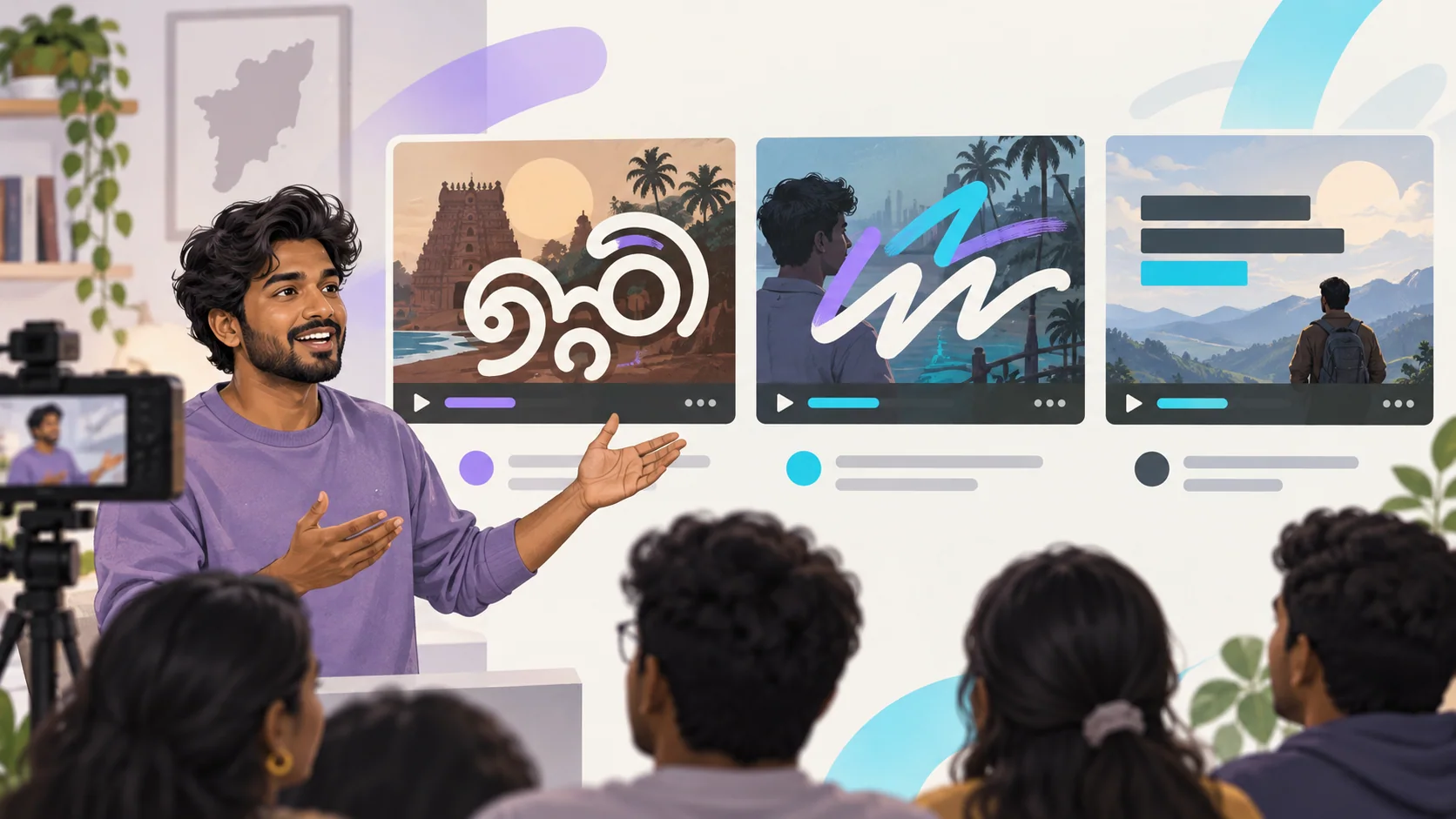
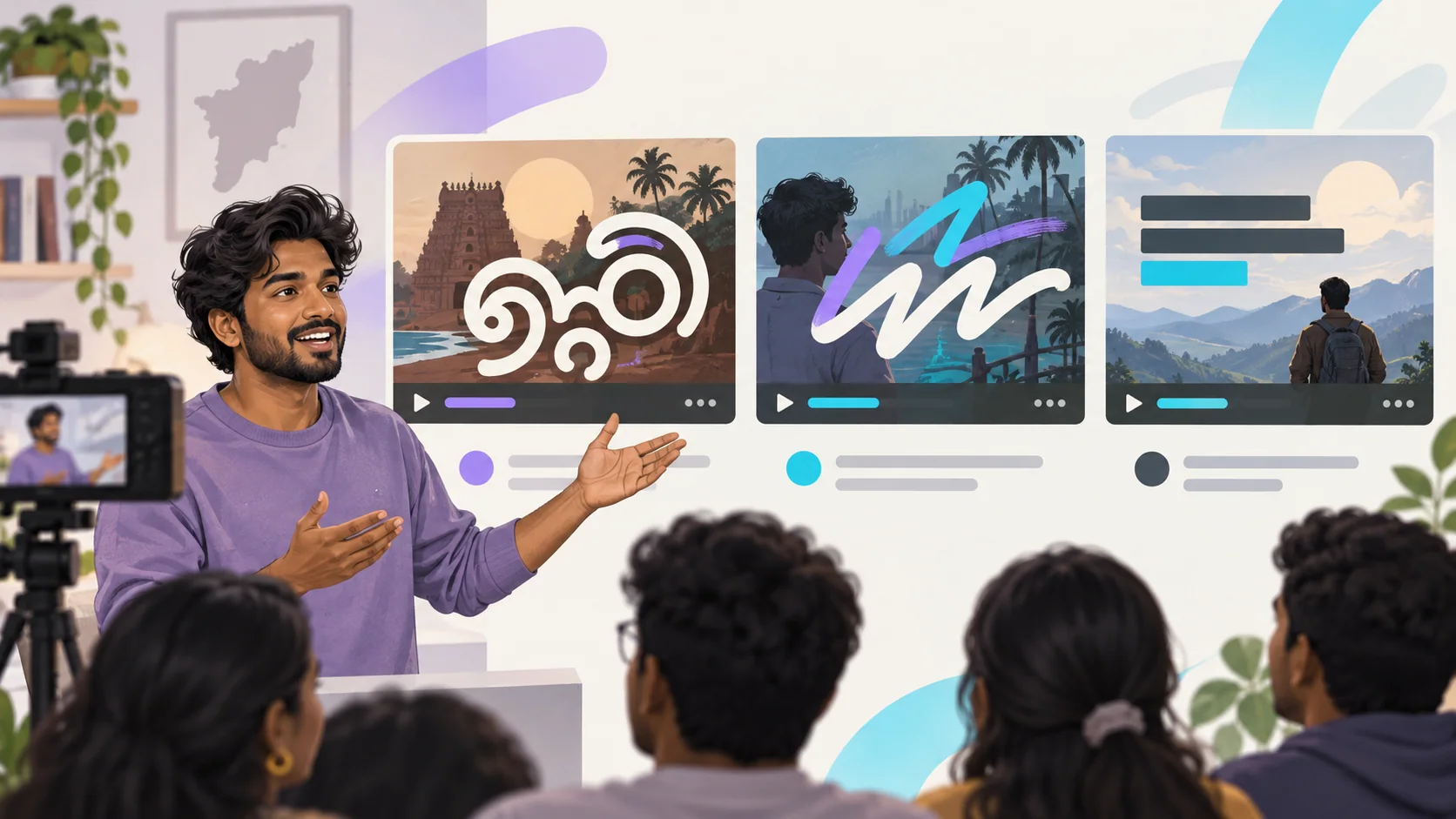
A Tamil title uses Tamil script and phrasing. Tanglish usually writes Tamil words in Latin script, often with English terms mixed in. An English title uses English wording. In practice, creators may mix scripts or keep product names and technical terms in English. The best choice is the one your target viewer can read quickly and connect to the content.
For example, a phone tutorial about storage cleanup might be expressed in Tamil script, a natural Tanglish phrase, or an English search phrase. These are illustrative equivalents, not measured performance claims. Do not translate word for word if it creates awkward phrasing. Preserve the viewer's problem and outcome, then express it as that audience would naturally say it.
How to choose a title language for a Tamil audience
Use signals from your own channel: the language of comments, search terms in YouTube Analytics, audience geography, returning-viewer behavior and the words viewers use when asking questions. A Tamil Nadu audience may still search some software names or device settings in English. Likewise, a Tamil speaker may prefer Tamil script for one topic and Tanglish for another.
The India YouTube SERP for the phrase “tamil vs tanglish youtube titles” was noisy. It surfaced videos about Tanglish and Tamil language generally, plus unrelated channel and title queries. That does not establish that Tamil, Tanglish or English titles rank better. It does show why creators need a topic-specific test rather than copying a broad language claim. You can use the YouTube title strategy guide to keep the topic and viewer promise clear regardless of script.
A simple Tamil vs Tanglish title test
- Write one plain-language promise: who the video helps, what it explains or demonstrates, and what evidence appears in the video.
- Draft that same promise in Tamil script, Tanglish and English. Ask a fluent reviewer to check for natural phrasing if you are not confident in the language.
- Keep the topic, claim and thumbnail concept as close as possible. Do not compare a searchable Tamil tutorial with an English curiosity hook and call the result a language test.
- Check that each version reads clearly when shortened in mobile surfaces. Put the recognizable topic early, then remove filler.
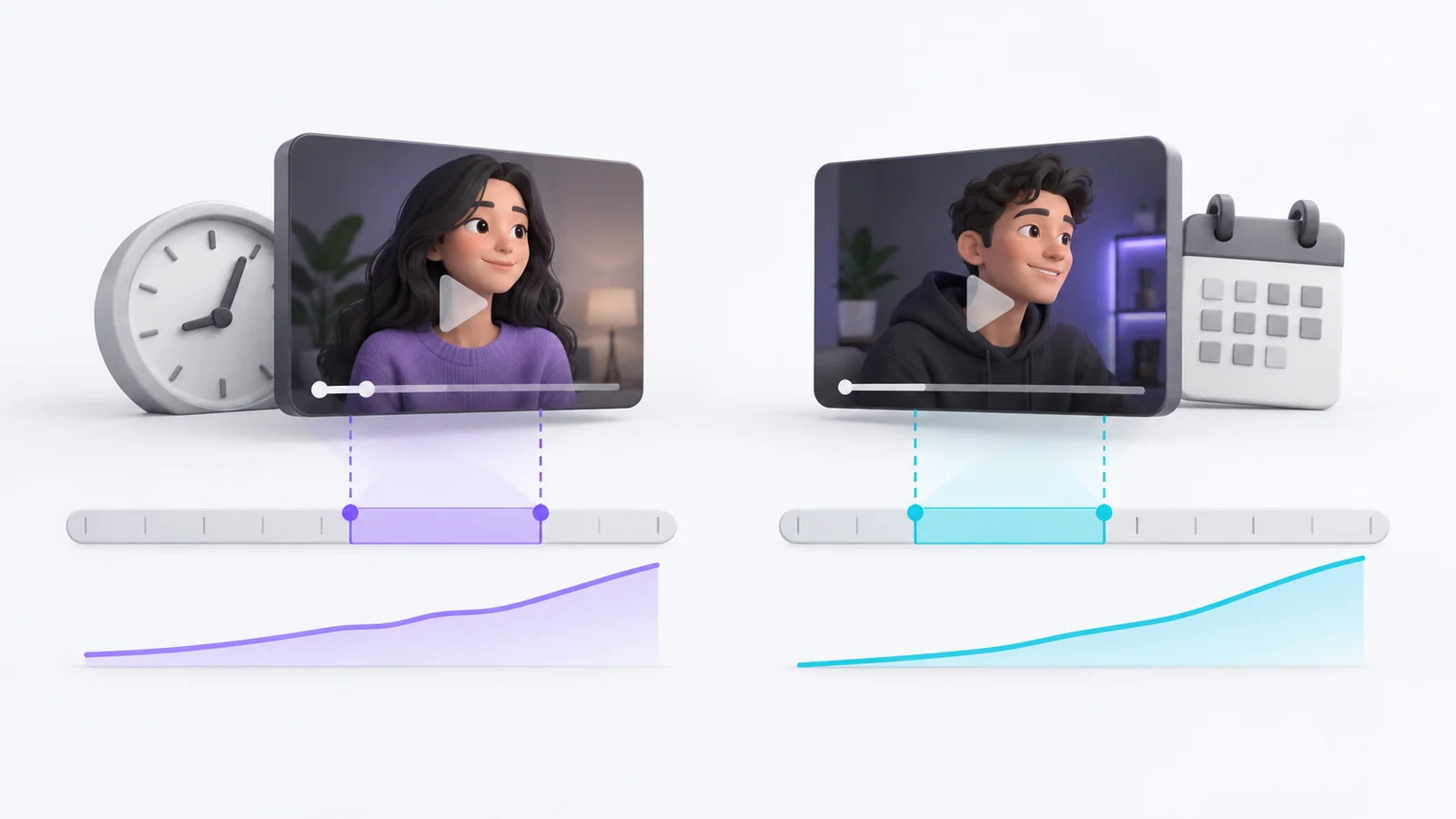
- If native A/B testing is available, compare title-only options and use the watch-time outcome YouTube reports. If testing sequentially, save dates and relevant traffic-source data; viewers and distribution will differ.
- Record the lesson as a hypothesis for similar videos, not a universal rule for the channel.
| Version | Example treatment | Check before publishing |
|---|---|---|
| Tamil script | Natural Tamil phrasing for the device problem and action | Can a Tamil reader understand the subject at a glance? |
| Tanglish | Spoken Tamil written in Latin letters, with familiar product terms | Is spelling consistent and readable for this audience? |
| English | The common English search phrase or product setting | Is it familiar to the intended viewer, not just technically precise? |
For more ways to express one idea without changing what the video promises, see YouTube title formulas by video format. If you compare language variants, the title-testing guide explains the limits of native and sequential tests.
Should every Tamil YouTube video use Tanglish?
No. A channel can choose language by topic and audience. Review how viewers search and comment, and consider accessibility for people who recognize Tamil speech but are more comfortable reading Roman letters, or vice versa. Keep the language choice consistent enough for the channel to feel coherent, while adapting when audience evidence supports it.
Frequently asked questions
Which is a better YouTube title, Tamil or English?
Neither is automatically better. A clear, accurate title in the audience's preferred reading language is a stronger starting point than an unsupported language rule. Check your own viewers and the actual search phrasing for that topic.
Why are YouTube video titles being translated?
YouTube lets creators add translated titles and descriptions, which may appear in Search for viewers who speak those languages. Translated metadata is a separate choice from the original title language, so check YouTube Studio's [translation workflow](https://support.google.com/youtube/answer/6289575?hl=en) when you want to localize a video.
Your next step
Choose one upcoming video and draft equivalent Tamil, Tanglish and English versions. Use the free Scriptio title generator to explore wording options, then have a fluent reviewer confirm that each version sounds natural and keeps the same promise.
Sources: YouTube thumbnail and title tips, YouTube A/B testing titles and thumbnails, YouTube translated title and description workflow
Write your next script in 60 seconds.
Scriptio writes a full Tanglish script in your exact voice, built from your own channel.
Explore the Tamil AI script writer or the Tanglish script generator for a more detailed walkthrough.
Start Free at Scriptio.in