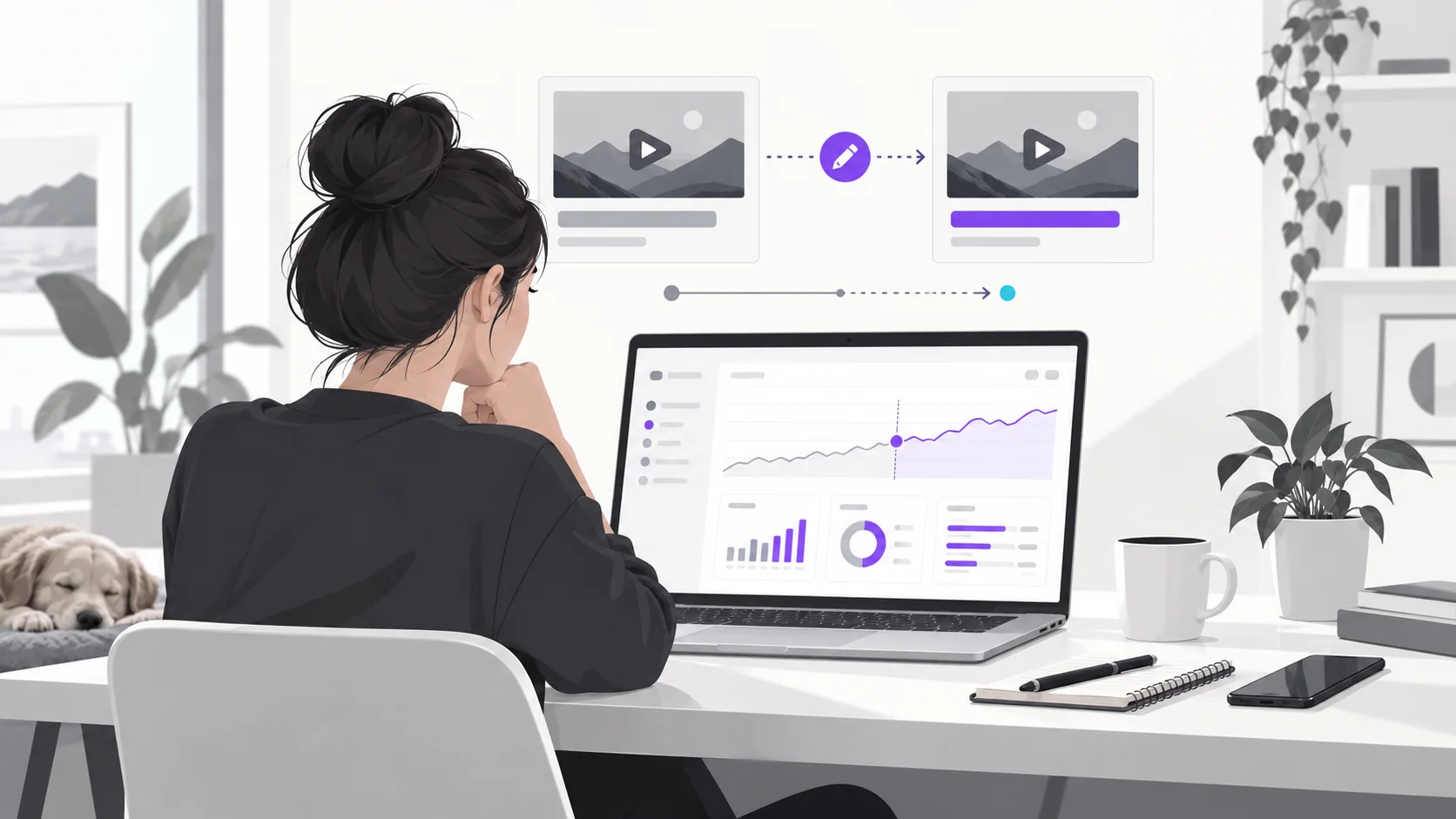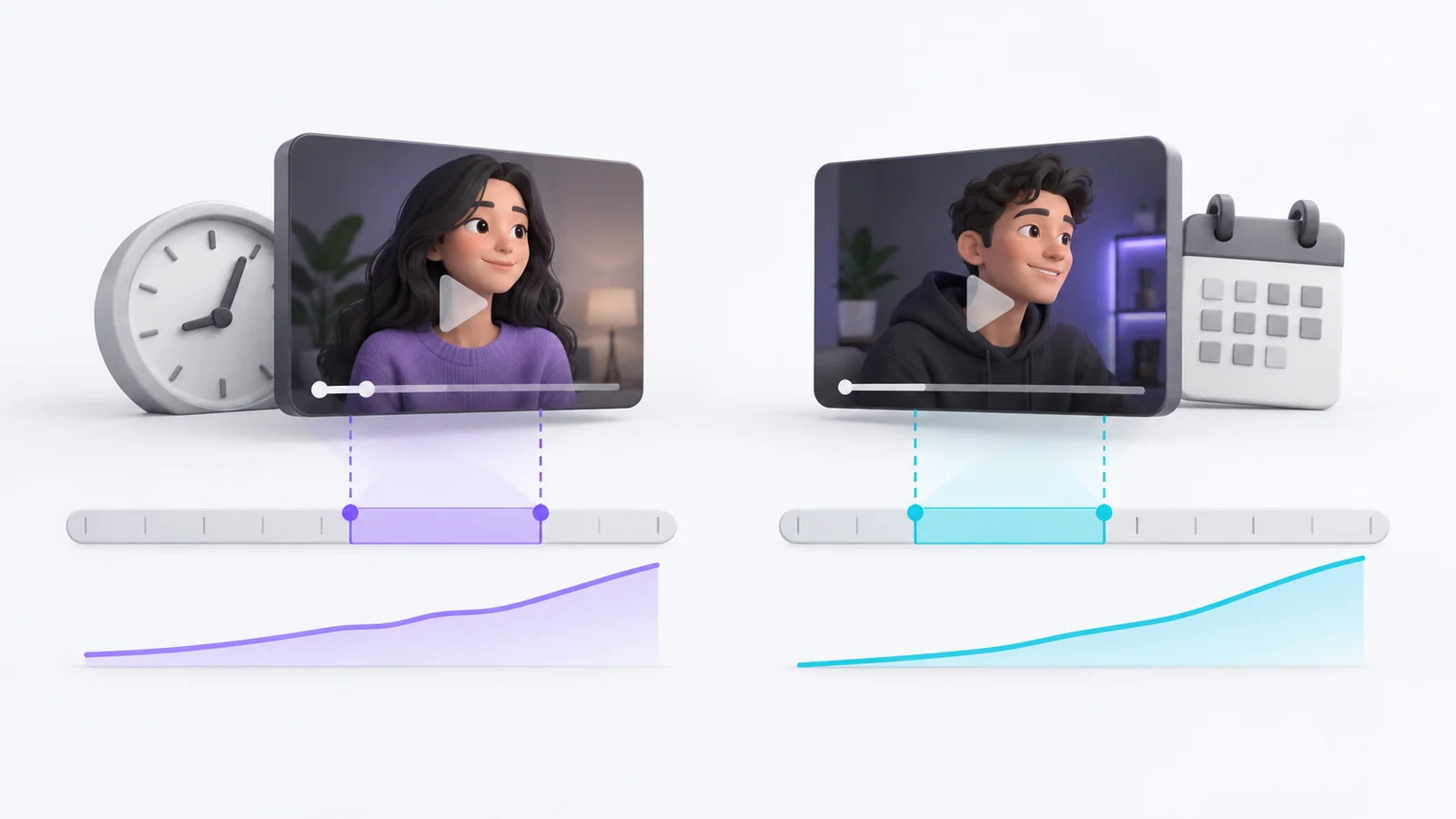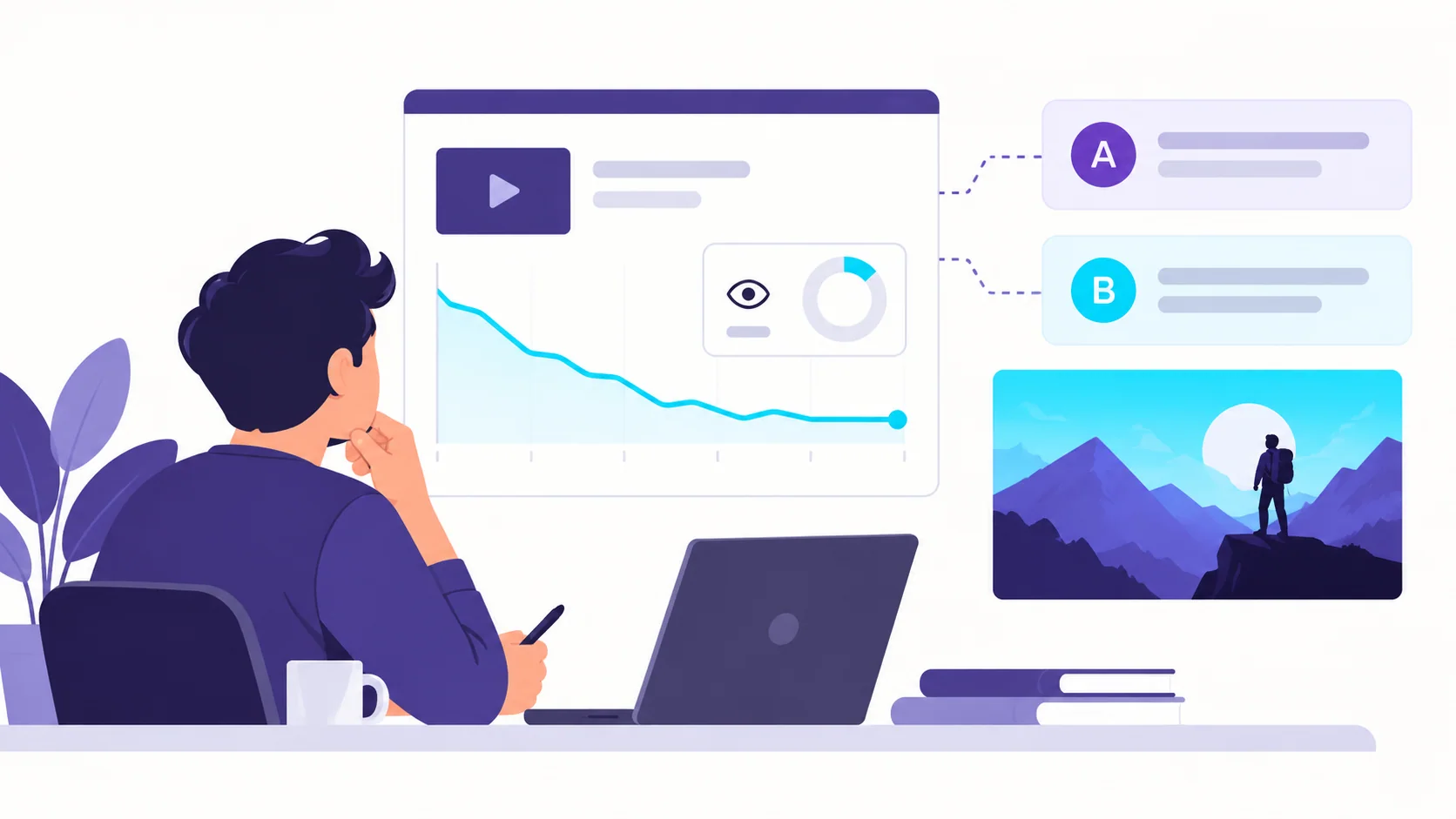
Quick Summary
- A low impressions click-through rate does not prove the title is the problem. Check impressions, traffic source, audience reach, thumbnail and watch behavior together.
- Compare a video with your own similar videos at a similar stage, not with a universal CTR target.
- If the video has meaningful impressions and the package is unclear or mismatched, revise one element at a time and record the date.
- Keep the title promise aligned with the thumbnail, opening and actual payoff.
- Use YouTube Studio's native title and thumbnail test when it is available, then judge its watch-time result rather than a tiny CTR movement.
You diagnose a low-CTR YouTube title by finding where the packaging may be failing, then checking whether the evidence points to the title, thumbnail, audience, or traffic source. Do not react to one early percentage. YouTube says CTR varies by surface and audience, and that reach can expand to viewers who are less familiar with a channel.
What a low YouTube CTR can and cannot tell you
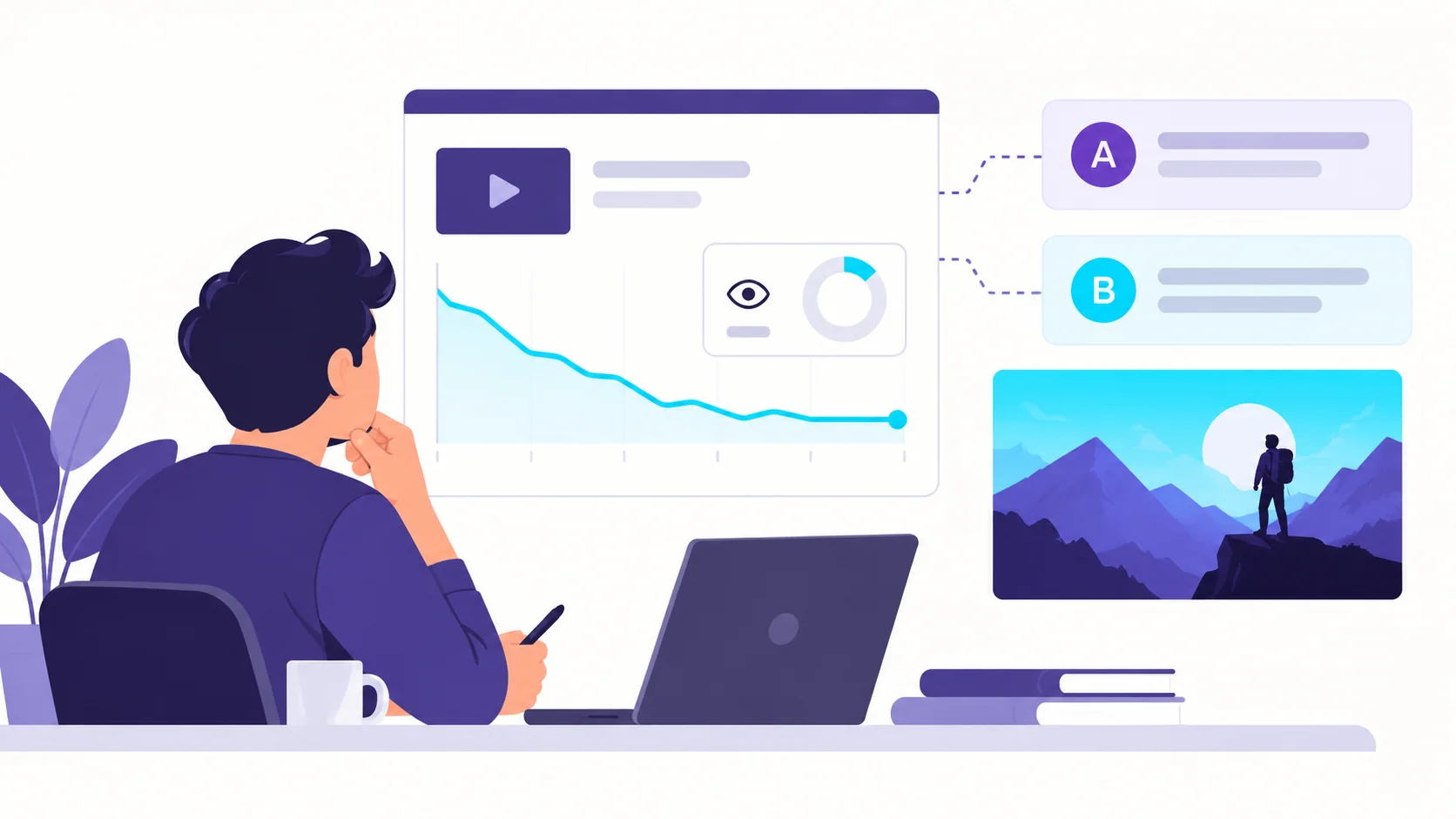
Impressions click-through rate is the share of counted thumbnail impressions that led to a view. It is a packaging signal, not a score for the title alone: the thumbnail, topic, viewer, and surface all influence whether someone clicks. A search impression and a Home impression do not represent the same intent.
YouTube notes that CTR can fall as impressions expand to broader audiences, even while the video earns more views. It also says half of channels and videos fall within a broad 2% to 10% range, which is not a target for every video. Compare like with like inside your channel and examine traffic sources before deciding that the title is weak. The title and thumbnail strategy guide explains how to make the pair communicate one promise.
How to diagnose a title that is not getting clicks
Start in YouTube Studio Analytics for the individual video. Set a useful date range and inspect impressions, impressions CTR, views, average view duration and traffic source together. Separate Browse, Suggested and Search where the report allows it. Ask whether the CTR is low compared with similar videos on the same surface, and whether impressions are still expanding.
Then inspect the promise. Can a new viewer tell what the video is about and why it may help or interest them? Does the title accurately describe the footage? Does the thumbnail add a useful visual clue, or repeat the same words without adding meaning? A vague subject, unsupported superlative or missing outcome can make the package harder to choose. For examples of how the division works, read how to divide one video promise between title and thumbnail.
Finally, look at what happens after the click. If the title attracts viewers who leave quickly because the video does not deliver, making the wording more sensational is likely to deepen the mismatch. Review the opening and the actual payoff before rewriting the package.
A practical decision table
| What you see | What to check next | Sensible next move |
|---|---|---|
| Low CTR on a small number of impressions | Whether the sample is still too early or narrow | Wait for more meaningful evidence; avoid a snap judgment |
| CTR falls while impressions and views grow | Whether the video is reaching a wider audience or new surfaces | Compare traffic-source slices and total watch time |
| Similar videos consistently outperform this one on the same surface | Topic, thumbnail clarity and title promise | Write a few accurate variants and test one change |
| CTR is strong but early viewing is weak | Whether the title or thumbnail overpromises | Improve the match between package, opening and content |
| Search is stronger than Browse | Whether the title names the searched problem clearly | Preserve the recognizable topic while sharpening the payoff |
These patterns are diagnostic prompts, not causal proof. Video topic and audience differ, so a comparison cannot isolate a title effect by itself.
How should you improve a low-CTR YouTube title?
Write three alternatives that express the same video truth in different ways: a clear searchable version, a specific outcome version and a curiosity-led version with a concrete reason to click. Use the YouTube title formulas guide to vary structure, then check each version against the finished video.
If your channel has access to YouTube's built-in A/B testing, test title only or thumbnail only when you want to learn about that element. The native tool can test up to three options for eligible long-form videos and determines its winner using watch time. If you change a title or thumbnail during a running experiment, the test stops. Shorts are not currently eligible for this test according to YouTube Help. The YouTube title-testing walkthrough explains how to choose the test type. When native testing is unavailable, a before-and-after edit is observational, not a controlled experiment: traffic, time and viewers also change.
Frequently asked questions
What does CTR stand for on YouTube?
CTR means click-through rate. Impressions CTR measures how often viewers watched after seeing a registered thumbnail impression on YouTube. It does not include every view source.
What is a good YouTube impressions CTR?
There is no single target that fits every video. YouTube reports a broad 2% to 10% range for half of channels and videos, while emphasizing that traffic source, audience and reach affect the metric. Compare similar videos and surfaces over time.
Should I change the title if CTR is low?
Only after checking whether the video has enough relevant impressions and whether the title is the likely issue. Review the thumbnail, audience, traffic source and post-click behavior first. If you change the title, keep a record and avoid claiming that a simple before-and-after proves causation.
Your next step
Review one video with the diagnostic table, then write a truthful title variant that improves clarity. If you want to draft options from the video's audience, promise and proof, try the free Scriptio viral title generator, then verify every suggestion against the finished video.
Sources: YouTube Analytics CTR and impressions guidance, YouTube impressions CTR FAQs, YouTube title and thumbnail tips, YouTube A/B testing titles and thumbnails
Write your next script in 60 seconds.
Scriptio writes a full Tanglish script in your exact voice, built from your own channel.
Explore the Tamil AI script writer or the Tanglish script generator for a more detailed walkthrough.
Start Free at Scriptio.in